Resetting Classroom Routines In January Without Burnout
January Classroom Reset: Building Calm Routines Without Starting Over
January can feel heavier than August.
Students are coming back from a long break. Teachers are carrying fatigue from the fall. And yet, the pressure to “reset everything” is loud.
The truth is, January classrooms don’t need a reinvention. They need a return to structure that feels familiar, clear, and manageable.
That’s what this reset is about.
Why January Resets Should Look Different Than Back-To-School
Unlike the beginning of the year, January isn’t about teaching expectations from scratch.
Students already know your room.
They already know your voice.
They already know what learning feels like with you.
What they need is:
Clear reminders
Predictable routines
A visible structure they can lock into quickly
When routines are recognizable, behavior decreases and instructional time increases. That matters more than any new system you could introduce mid-year.
The Power Of Familiar Routines After Break
One of the biggest mistakes teachers make in January is changing too much too fast.
Instead of rebuilding, anchor.
Ask yourself:
What routines already work?
What systems do students respond to without resistance?
Where can I reduce explanation and increase visibility?
The goal is not excitement. The goal is stability.
How Daily Slides Support A Calm Classroom Reset
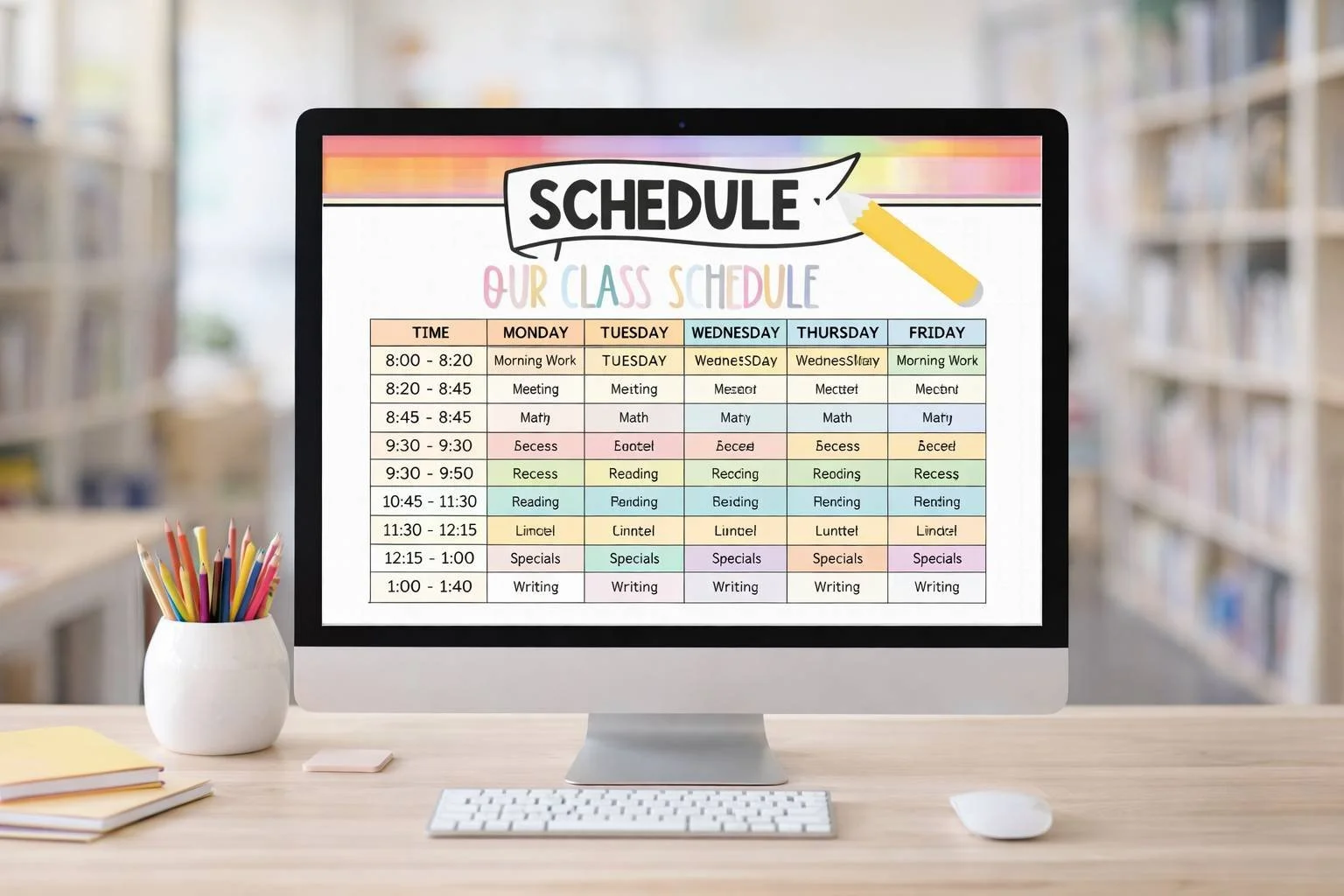
One of the simplest ways to reestablish rhythm is through daily slides.
In my classroom, daily slides:
Organized the day without constant verbal reminders
Made transitions smoother
Reduced questions like “What are we doing next?”
Allowed me to focus on instruction instead of logistics
When students know where to look and what’s coming, the classroom settles faster. That sense of calm is especially important in January.

You can explore my Bright Daily Google Slide Templates here
These templates are designed to support:
Predictable daily flow
Familiar routines students already recognize
Reduced decision fatigue for teachers during re-entry weeks
They’re intentionally simple, flexible, and ready to use.
What A Real January Reset Looks Like In Practice
A January reset doesn’t require a brand-new system.
It looks like:
Reposting expectations instead of rewriting them
Reintroducing routines without over-explaining
Using tools that carry structure for you
Protecting your energy while momentum rebuilds
Progress comes from consistency, not urgency.
Choosing Tools That Support You, Not Overwhelm You
January is not the month to add complexity.
If a resource:
Requires heavy prep
Demands daily tweaking
Adds to your mental load
It’s not serving you right now.
Your tools should help you hold the line, not reinvent it.
Browse classroom resources designed for steady routines and low prep here
Final Thoughts For The Month Ahead
January doesn’t need to be loud to be effective.
Start with structure.
Let rhythm return.
Allow momentum to build naturally.
If you’re looking for classroom tools that support calm routines, predictable flow, and teacher sustainability, you’re in the right place.
You don’t need to do everything this month.
You need systems that work quietly in the background.