
The SDAs of Black History: Turning Bulletin Boards Into Literacy Tools
When we talk about Black history in the classroom, we are really talking about stories. Stories of leadership. Stories of faith. Stories of impact that deserve to be seen, read, discussed, and remembered.
That is exactly why I created The SDAs of Black History Bulletin Board Kit.
This resource was never meant to be just something pretty on the wall. It was designed to function as a literacy anchor, one that supports reading, thinking, and meaningful conversation while honoring the legacy of Black Seventh-day Adventist leaders.
Why This Resource Exists
As an educator, I am always asking myself one question:
How does this support instruction?
I noticed that many Black History displays stop at names and dates. Important, yes, but not enough. Students need context. They need language. They need opportunities to read informational text and connect it to bigger ideas.
This bulletin board was inspired by the historical work preserved through Black SDA History, which documents the lives and leadership of Black Seventh-day Adventists across ministry, education, healthcare, media, and public service. Their stories deserve to live beyond a website and into classrooms where students can engage with them directly.
You can explore that history here:
https://www.blacksdahistory.org/people
How I Use This Inside My Literacy Block
This is where the shift happens.
I use the profiles as informational texts, not decorations. Each poster supports:
Background knowledge building
Text feature analysis
Vocabulary development
Speaking and listening
Short written responses
Here’s a simple flow I use:
Before reading
We preview the name, role, and photo. Students make predictions and activate prior knowledge.
During reading
Students read the profile text closely. We highlight key details, unfamiliar vocabulary, and leadership traits.
After reading
We discuss impact. Students respond verbally or in writing using sentence frames, turn-and-talks, or short constructed responses.
The bulletin board becomes a living reference point students return to again and again.
Why This Works
Students learn best when instruction feels purposeful.
By tying Black history directly into literacy routines, students are not just learning about history. They are practicing how to read, analyze, and talk about complex ideas through real people and real contributions.
This approach also works beautifully across settings:
Elementary and middle grades
Religion and social studies blocks
Chapel prep or faith-based classrooms
Black History Month and beyond
What’s Included in the Kit
The SDAs of Black History Bulletin Board Kit includes:
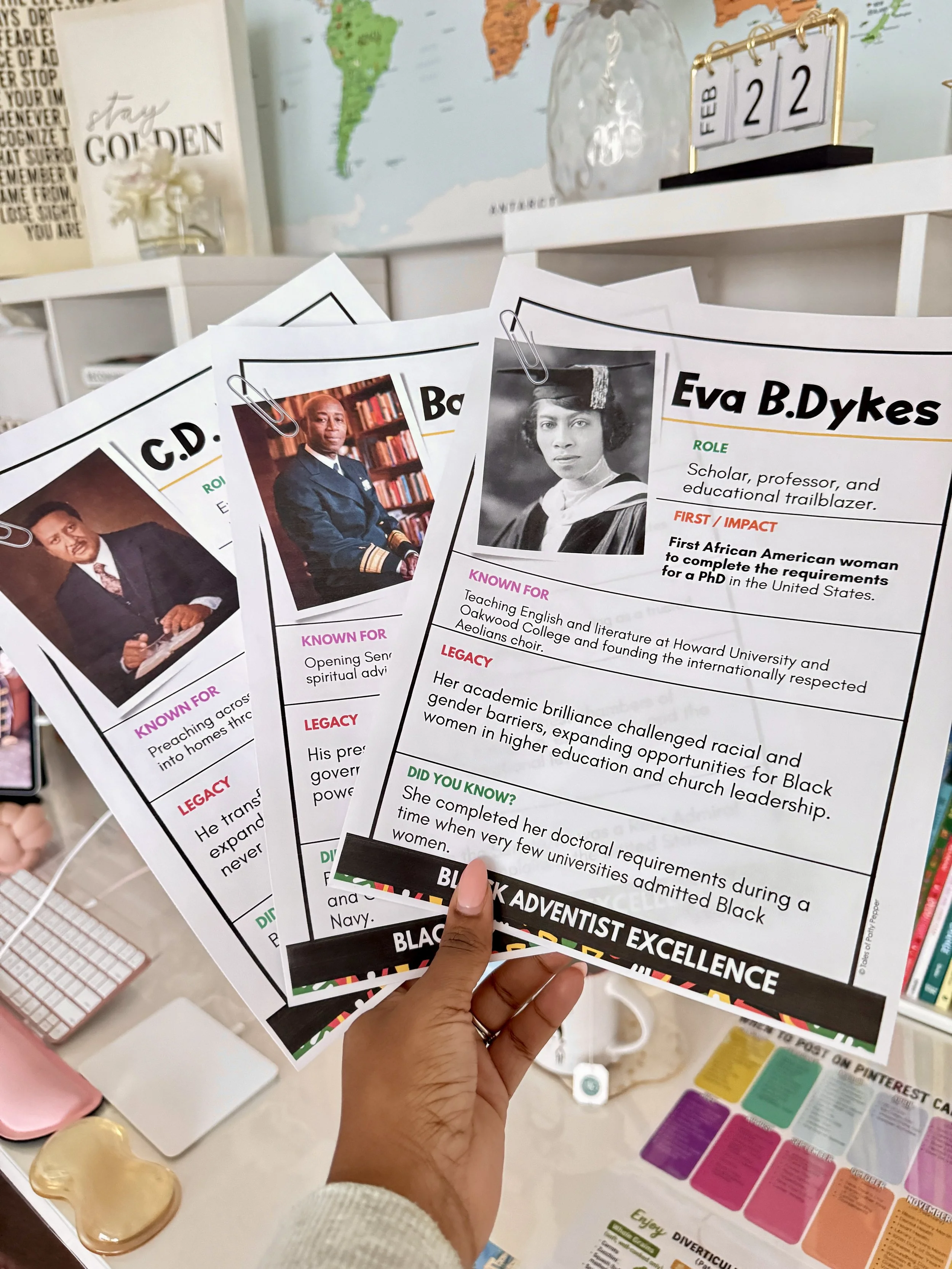
Research-based profile posters
A clean, modern bulletin board design
Figures students should genuinely know
Materials that invite discussion, not just observation
If your goal is to make your walls teach, this resource was built for that.
Grab the full bulletin board kit here
Final Thought
Literacy is not separate from culture.
Faith is not separate from history.
And bulletin boards should never be passive.
This resource brings all three together in a way that feels intentional, respectful, and instructional.
If you know a teacher, school, or church classroom that would benefit from this approach, feel free to share this post with them.