
 Image 1 of 4
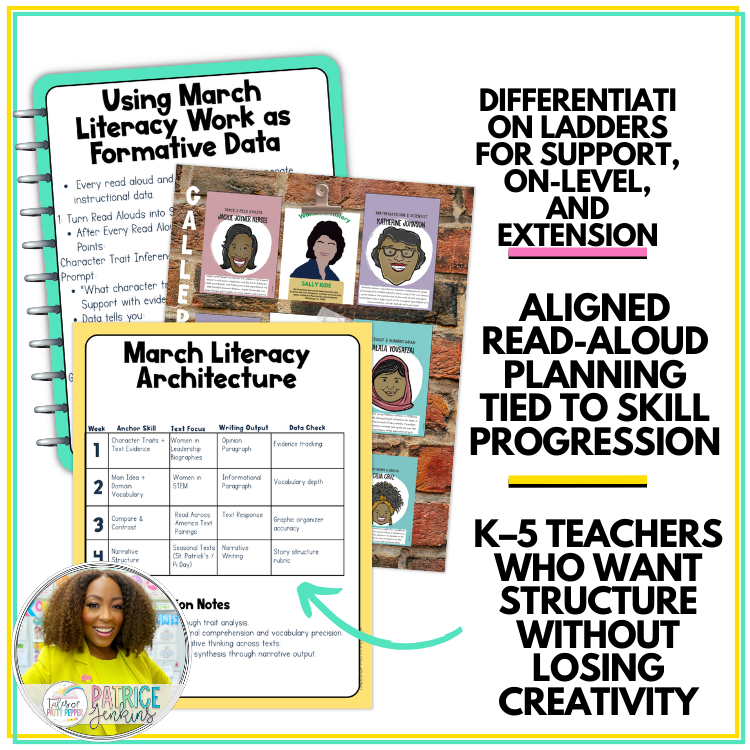 Image 2 of 4
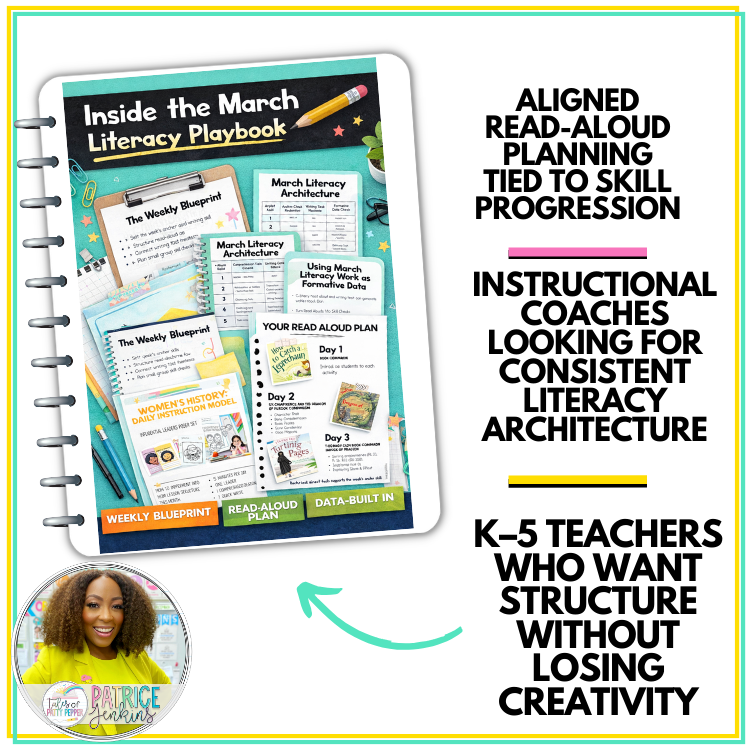 Image 3 of 4
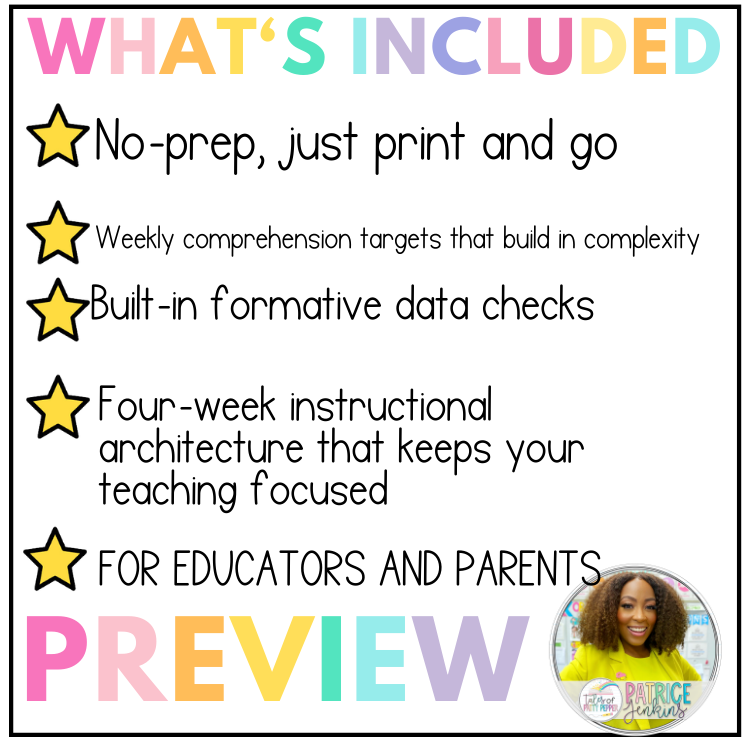 Image 4 of 4
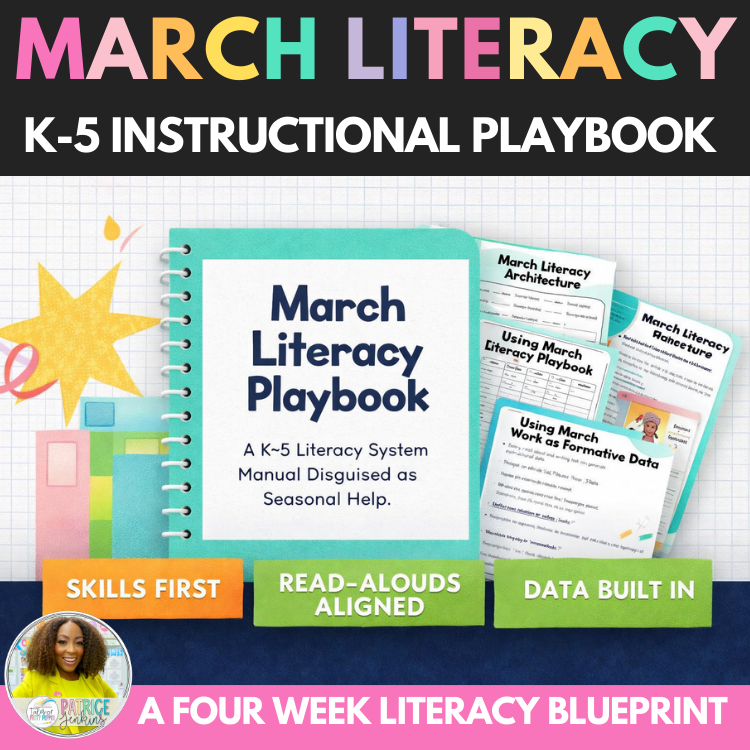
A K–5 literacy system manual disguised as seasonal help.
March can easily become theme-heavy and skill-light.
Women’s History.
Read Across America.
Seasonal writing.
Testing season approaching.
Without a clear structure, literacy blocks start to drift.
The March Literacy Playbook gives you a four-week instructional architecture that keeps your teaching focused, measurable, and aligned to core comprehension and writing skills — while still honoring seasonal engagement.
This is not a packet.
It is a planning framework.
• A four-week literacy blueprint aligned to anchor skills
• Weekly comprehension targets that build in complexity
• Aligned read-aloud planning tied to skill progression
• Writing outputs that reinforce comprehension
• Built-in formative data checks
• Differentiation ladders for support, on-level, and extension
• A literacy centers framework map
• A Sunday night implementation guide
Each week answers four questions:
What skill am I teaching?
How will students apply it in writing?
What data will I collect?
How will I adjust next week?
Seasonal themes become context.
Skill progression remains the priority.
• K–5 teachers who want structure without losing creativity
• Teachers who want seasonal engagement without instructional drift
• Educators who want data without adding extra paperwork
• Instructional coaches looking for consistent literacy architecture
If you want March to feel intentional instead of reactive, this playbook gives you the structure to make that happen.
A K–5 literacy system manual disguised as seasonal help.
March can easily become theme-heavy and skill-light.
Women’s History.
Read Across America.
Seasonal writing.
Testing season approaching.
Without a clear structure, literacy blocks start to drift.
The March Literacy Playbook gives you a four-week instructional architecture that keeps your teaching focused, measurable, and aligned to core comprehension and writing skills — while still honoring seasonal engagement.
This is not a packet.
It is a planning framework.
• A four-week literacy blueprint aligned to anchor skills
• Weekly comprehension targets that build in complexity
• Aligned read-aloud planning tied to skill progression
• Writing outputs that reinforce comprehension
• Built-in formative data checks
• Differentiation ladders for support, on-level, and extension
• A literacy centers framework map
• A Sunday night implementation guide
Each week answers four questions:
What skill am I teaching?
How will students apply it in writing?
What data will I collect?
How will I adjust next week?
Seasonal themes become context.
Skill progression remains the priority.
• K–5 teachers who want structure without losing creativity
• Teachers who want seasonal engagement without instructional drift
• Educators who want data without adding extra paperwork
• Instructional coaches looking for consistent literacy architecture
If you want March to feel intentional instead of reactive, this playbook gives you the structure to make that happen.