How to Build Structured K-5 Literacy Blocks for Measurable Reading Growth
Most K–5 literacy blocks feel rushed and scattered. Teachers are juggling phonics, reading groups, vocabulary, and writing with very little time to make it all work.
The truth is that strong reading growth doesn’t come from more activities. It comes from a clear instructional structure.
In this guide, you’ll learn how to build a structured literacy block that supports phonics, fluency, vocabulary, and comprehension while giving you time for small group instruction. For more ideas, check out this resource.
In this blog post, you’ll learn:
What a structured literacy block includes
How the science of reading supports literacy instruction
How to schedule your daily reading block
Small group reading strategies that improve reading growth
How to monitor student progress
Designing Effective Literacy Blocks
Creating a structured literacy block is key to student success. You need components that are clear, engaging, and backed by research. Let’s explore how to make this happen in your classroom.
What Should Be Included in a Literacy Block
Your literacy block needs a mix of essential elements. Begin with phonics and phonemic awareness. These are foundational for reading skills. Students benefit from understanding letter sounds and blending them to form words. Next, focus on decodable texts. These texts reinforce phonics lessons, allowing students to practice reading confidently.
Include fluency practice, too. Aim for daily sessions where students read aloud. This builds speed and accuracy. Use partner reading or timed readings for variety. Don’t forget about vocabulary development. Introduce new words in context. Discuss meanings and use them in sentences. Finally, practice comprehension strategies. Teach students to make predictions and summarize stories. By including these components, you set the stage for balanced literacy growth.
How the Science of Reading Shapes Literacy Instruction
Understanding how kids learn to read is crucial. The science of reading provides insights into effective teaching methods. It emphasizes phonics as a core skill. Ensure your lessons cover letter sounds, blending, and decoding. Research supports explicit instruction in these areas.
Next, focus on oral language. Encourage discussions about books. Ask open-ended questions and listen to their ideas. This boosts comprehension and critical thinking. Another key is background knowledge. Relate new information to what students already know. This helps them connect ideas and retain information. Finally, integrate writing about reading. Have students write summaries or reflections on their reading. This reinforces understanding and improves literacy skills.
A Simple Daily Literacy Block Schedule
A well-planned schedule maximizes learning. Start with a daily routine. Begin each day with a mini-lesson. Cover a specific skill or strategy. Keep it short, about 10-15 minutes. Follow with guided practice. Work with small groups while others do independent tasks. Rotate groups so each gets your attention.
Include time for independent reading. Let students choose books they’re interested in. This fosters a love for reading. End with a brief reflection. Discuss what they learned and enjoyed. This routine builds habits that enhance literacy skills.
Monday – Build background and vocabulary
Tuesday – Model comprehension strategies
Wednesday – Guided discussion and written response
Thursday – Independent application
Friday – Quick assessment and reflection
Teachers who want a full month of structured literacy instruction can explore the March Literacy Playbook, which includes weekly reading themes, writing prompts, and small group planning ideas.
Small Group Reading Strategies
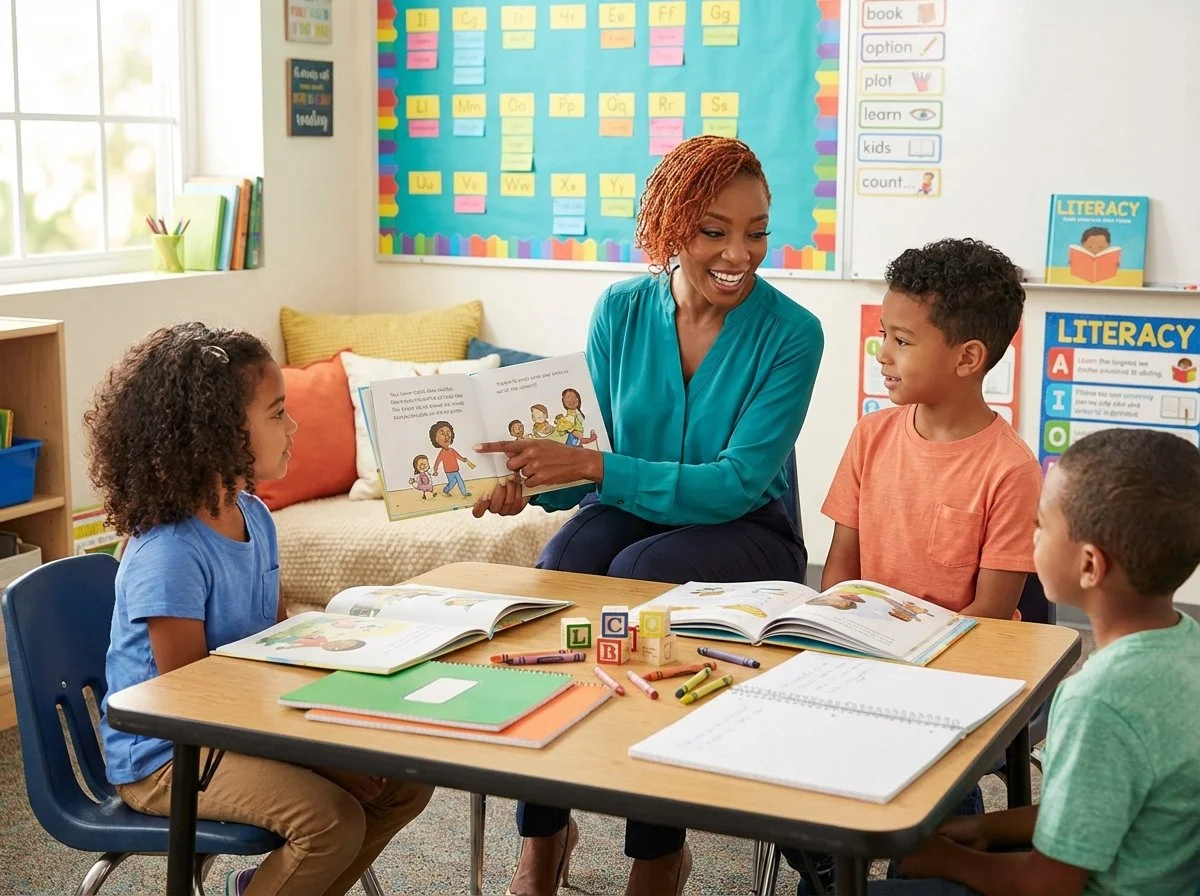
Small group instruction tailors learning to student needs. It’s a powerful way to boost reading skills. Let’s dive into effective strategies you can use.
Phonics and Phonemic Awareness
Phonics instruction is crucial in small groups. Start with letter sounds and blending. Use sound cards or manipulatives. These tools help students see and hear connections. Phonemic awareness activities are also key. Play games that involve rhyming or sound matching. Keep sessions interactive and fun.
Assess student progress regularly. Adjust your teaching based on their needs. Focus on those who struggle with particular sounds. Provide extra practice until they master them. Remember, the goal is confident, independent readers.
Decodable Texts and Fluency Practice
Decodable texts bridge the gap between phonics lessons and real reading. Choose texts that align with your phonics instruction. These provide practice in a controlled setting. Encourage students to read aloud. This builds fluency—reading with speed and accuracy.
Use tools like timed readings or partner reading. These engage students and track progress. Celebrate improvements to motivate them. Repeated reading of familiar texts also enhances fluency. Keep motivating students to challenge themselves.
Vocabulary and Comprehension Techniques
Vocabulary and comprehension are vital in reading instruction. Introduce new words in context. Use stories or current events to make connections. Discuss meanings and encourage use in sentences.
Teach comprehension strategies explicitly. Focus on making predictions and summarizing. Use graphic organizers to visualize information. Encourage students to ask questions while reading. This promotes active engagement with the text. These techniques build strong, independent readers.
Monitoring Progress and Growth

Tracking progress is essential for effective teaching. Use data to inform instruction and ensure students meet their goals.
Data-Driven Instruction Methods
Gather and analyze student data regularly. Use reading assessments to identify strengths and weaknesses. Adapt your teaching based on this information. Small group sessions allow targeted instruction. Focus on areas needing improvement. Share data with students. Discuss their progress and set new goals together.
Classroom Management Routines
A structured classroom supports literacy growth. Establish clear routines from day one. This creates a predictable environment where students know what to expect. Use visual schedules and signals to guide transitions. Practice routines until they become habits. This saves time and minimizes disruptions.
Reading Assessments and Feedback
Assessments show how well students are progressing. Use a mix of formal and informal methods. Track reading levels and comprehension skills. Provide regular feedback. Highlight strengths and offer suggestions for improvement. Encourage self-assessment too. This empowers students to take charge of their learning journey.
Keep the focus on growth and celebrate achievements along the way. This positive reinforcement encourages continued effort and engagement.
A strong literacy block doesn’t happen by accident. It comes from clear routines, intentional instruction, and consistent practice.
When phonics, fluency, vocabulary, and comprehension are taught within a predictable structure, students gain the confidence and skills they need to grow as readers.
FAQ: Literacy Blocks
How long should a K–5 literacy block be?
Most literacy blocks range from 90 to 120 minutes, depending on grade level.
What should be included in a literacy block?
Effective literacy blocks typically include phonics instruction, guided reading or small groups, vocabulary development, fluency practice, and comprehension work.
How do you differentiate during a literacy block?
Small group instruction allows teachers to target specific reading skills based on student data and assessment results.
You don’t need a brand new program. You need a system that works every day.
Start by building a simple weekly structure for your literacy block. Then use targeted small group instruction and regular progress monitoring to guide your teaching.
Free Literacy Planning Tool
If you want help organizing your weekly literacy instruction, download my Weekly Literacy Planning Template to help structure phonics, reading groups, and comprehension lessons.
That converts blog readers into subscribers.
If you want a ready-to-use structure for planning your literacy instruction, explore the Weekly Literacy Flow Plan. This simple framework helps teachers build predictable routines that strengthen comprehension and writing skills. The Weekly Literacy Plan
With the right structure in place, your literacy block becomes less overwhelming and far more effective for both you and your students.